

Understanding Blocking for Your Portable Building: Essential Tips and Insights
- Tori

- Feb 2
- 3 min read
Updated: Apr 10
When planning to place a portable building on your property, one key factor often overlooked is blocking. Blocking means setting your building on solid concrete blocks to support, level, and protect it over time. This simple step plays a crucial role in maintaining your building’s stability, preventing moisture damage, and ensuring proper airflow underneath. Understanding what blocking involves and why it matters can save you from costly repairs and headaches down the road.

What Blocking Means for Your Portable Building
Blocking refers to placing your portable building on 8x8x16 solid concrete blocks. These blocks act as a sturdy foundation that keeps the building off the ground. Unlike hollow blocks, pads, or cap blocks, solid concrete blocks provide the strength and durability needed to support the weight of the structure evenly.
By using the correct blocks, your building will be:
Properly supported to prevent sinking or shifting
Leveled to avoid structural stress and door or window misalignment
Elevated to allow airflow beneath the building, reducing moisture buildup
This foundation method is especially important if your site has uneven or soft ground. Without blocking, the building could settle unevenly, causing damage or making it unsafe.
Why Blocking Matters for Longevity and Performance
Blocking is optional but highly recommended. Here’s why it makes a difference:
1. Protects Against Moisture Damage
When a building sits directly on the ground, moisture can collect underneath. This leads to wood rot, mold, and deterioration of the building’s floor and frame. Blocking raises the building, allowing air to circulate and moisture to evaporate.
2. Ensures Structural Stability
Uneven ground or soft soil can cause a building to tilt or sink over time. Solid blocks provide a firm, level base that keeps the structure stable and prevents warping or cracking.
3. Maintains Proper Leveling
A level building is easier to use and maintain. Doors and windows open smoothly, floors stay even, and the overall appearance remains neat. Blocking allows the installer to adjust the height of each block layer to achieve perfect leveling.
4. Supports Long-Term Value
Buildings with proper blocking require fewer repairs and last longer. This protects your investment and keeps your portable building functional for years.
What Customers Need to Know Before Delivery
Customers Must Provide the Blocks
You are responsible for purchasing the 8x8x16 solid concrete blocks or pads before delivery. If the blocks are not on-site when the driver arrives, the building will be set directly on the ground. This can lead to the issues mentioned above.
Blocking Fees Apply if Driver Performs Blocking
If you want the delivery driver to place the blocks and level the building, a blocking fee applies. This fee covers the extra time and effort required.
For buildings sized 6x10 up to 12x28, the fee is $100 per layer of blocks.
For buildings 12x29 and larger, the fee is $150 per layer of blocks.
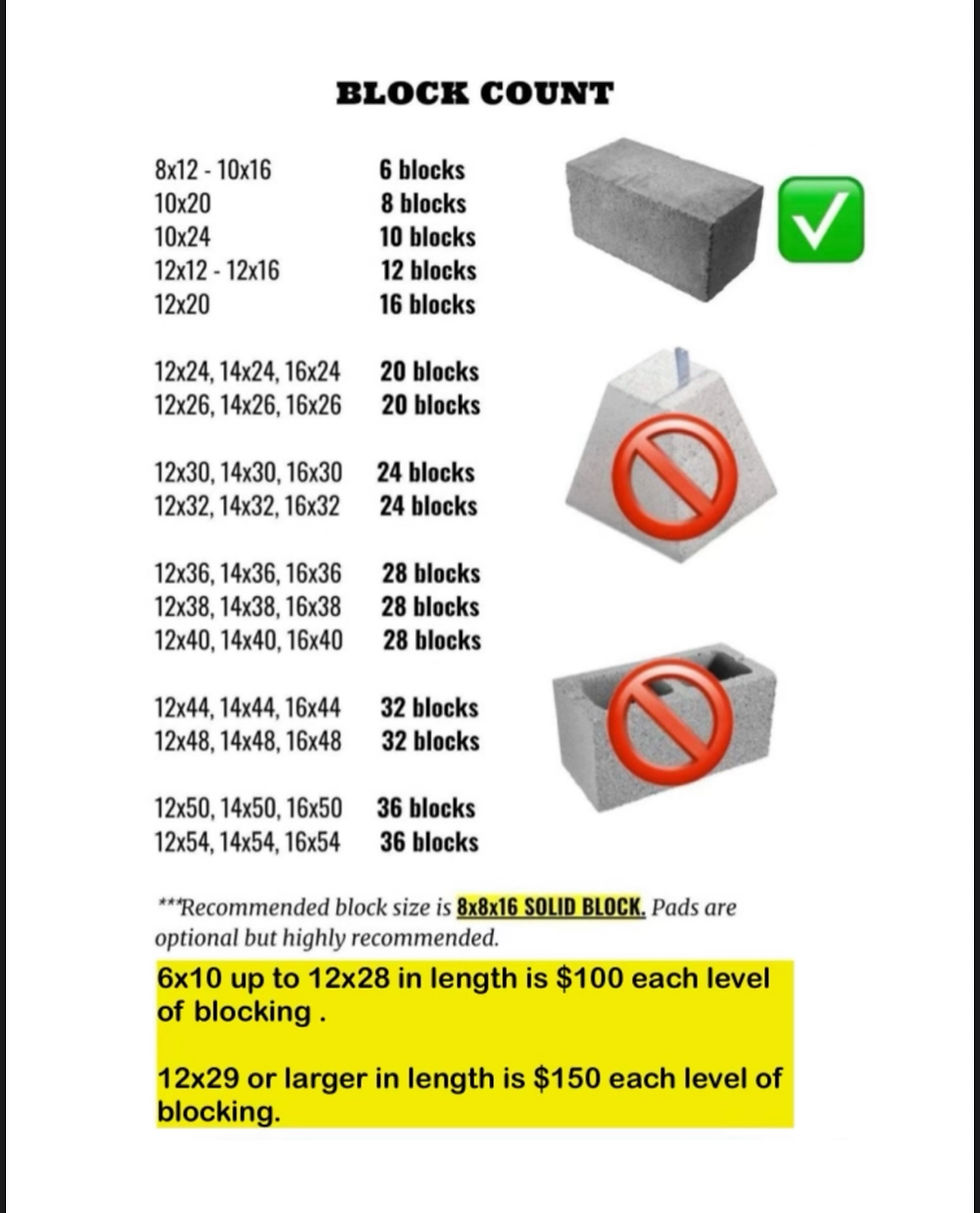
Blocking may require multiple layers depending on your site’s ground conditions and how much leveling is needed.
Fees Are Paid Directly to the Driver on Delivery Day
Make sure to have payment ready for the blocking fee if you choose this service. The driver will collect it at the time of delivery.
Drivers Do Not Perform Site Preparation
The delivery team will only deliver, place, and level the building on the blocks. They do not perform excavation, ground correction, or site prep. Your ground should be level and compacted before delivery for the best results.
Preparing Your Site for Blocking
To get the most from blocking, prepare your site carefully:
Clear debris and vegetation where the building will sit.
Level the ground as much as possible using a shovel or grading tools.
Compact the soil to create a firm base that won’t shift under the blocks.
If your ground is very soft or uneven, consider adding a gravel base for extra stability.
Proper site prep reduces the number of block layers needed and helps the building stay level longer.
Summary of Key Blocking Points
Blocking uses only 8x8x16 solid concrete blocks (no hollow blocks, pads, or cap blocks).
Customers must purchase and have blocks on-site before delivery.
Blocking is optional but strongly recommended for building longevity and performance.
Blocking fees apply if the driver places blocks:
- $100 per layer for 6x10 to 12x28 buildings
- $150 per layer for buildings 12x29 and larger
Fees are paid directly to the driver on delivery day.
Blocking may require multiple layers depending on site conditions.
Drivers do not perform site prep or excavation.
The ground should be level and compacted before delivery.

Comments